
Visakhapatnam people’s convention demands moratorium on new hyperscale AI data centres in Andhra
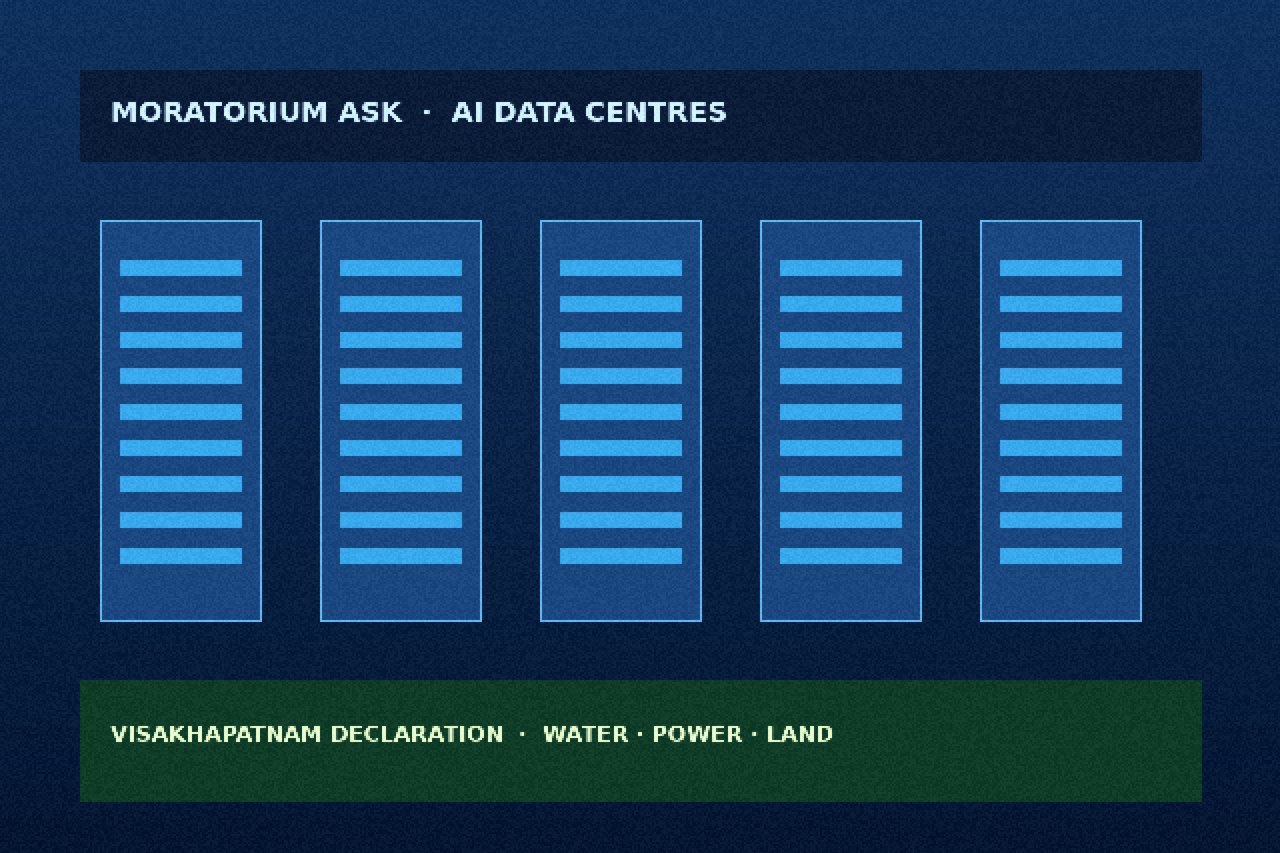
More than 650 delegates gathered in Visakhapatnam on Sunday, 6 September 2026, for a People’s Convention on AI Data Centres organised with the Society for Green Visakha at Alluri Sitaramaraju Vignana Kendram. The convention pressed for a moratorium on new hyperscale data-centre approvals in Andhra Pradesh until an independent cumulative environmental and social impact study is completed. The locked public record is a civic demand list, not a finished government gazette suspending every clearance.
Keynote speaker E.A.S. Sarma, a retired IAS officer and former Union Power and Finance Secretary, questioned resource allocation to a proposed 6,500 MW Google data centre in a water-stressed city. He linked large per-gigawatt State incentives to the politics of Polavaram tribal displacement and inadequate compensation as an indirect subsidy, framing the issue under Article 21. He also disputed air-cooling claims as electricity-intensive rather than water-neutral. For a coastal city already debating water security, the keynote cast hyperscale computing as a rival claimant on the same reservoirs and grid.
V.S. Krishna of the Human Rights Forum pointed to pump-storage projects in Chintapalli and Anakapalli and a proposed thermal plant in Srikakulam as energy infrastructure driven by data-centre demand. Advocate D. Nagasaila of the Madras High Court bar said the National Green Tribunal had admitted petitions challenging all three environmental clearances and alleged that clearances were processed within days. Sohan Hatangadi said even a 1 GW facility might create only about 500 mostly skilled jobs unavailable locally — a labour math that undercuts jobs-first sales pitches for greenfield halls.
N. Chandrashekhar released the Visakhapatnam Declaration calling for a moratorium, disclosure of agreements, revocation of improper clearances, an independent energy and water audit, restoration of land rights, and an end to protest surveillance. Raja Rama Mohan Roy welcomed the framing of equity, responsibility and sustainability — not an anti-technology brief. The declaration’s surveillance point places civil-liberty concerns beside the environmental ledger.
Investigate desks should separate the declaration’s demand list from any invented Cabinet order. Coastal Andhra’s data-centre map now sits inside the same public argument that once focused on ports and pharma: who gets water, who gets power, and who gets heard when clearances move fast. The locked set is the Sunday convention, the 6,500 MW proposal named in the keynote, the NGT admission claim, the 1 GW / ~500 jobs line, and the Visakhapatnam Declaration points. This cutting does not invent megawatt-hour water numbers beyond those locked claims, nor does it treat every clearance as already quashed. Readers should hold the moratorium ask as a civic demand until the State answers on paper.

Comments