Day 10. No emergency. They cut the demand. The offer is still 3%.
Day 10 of the strike. Day 4 without emergency duty. Junior doctors in Andhra have cut their own demand and still been offered almost nothing.
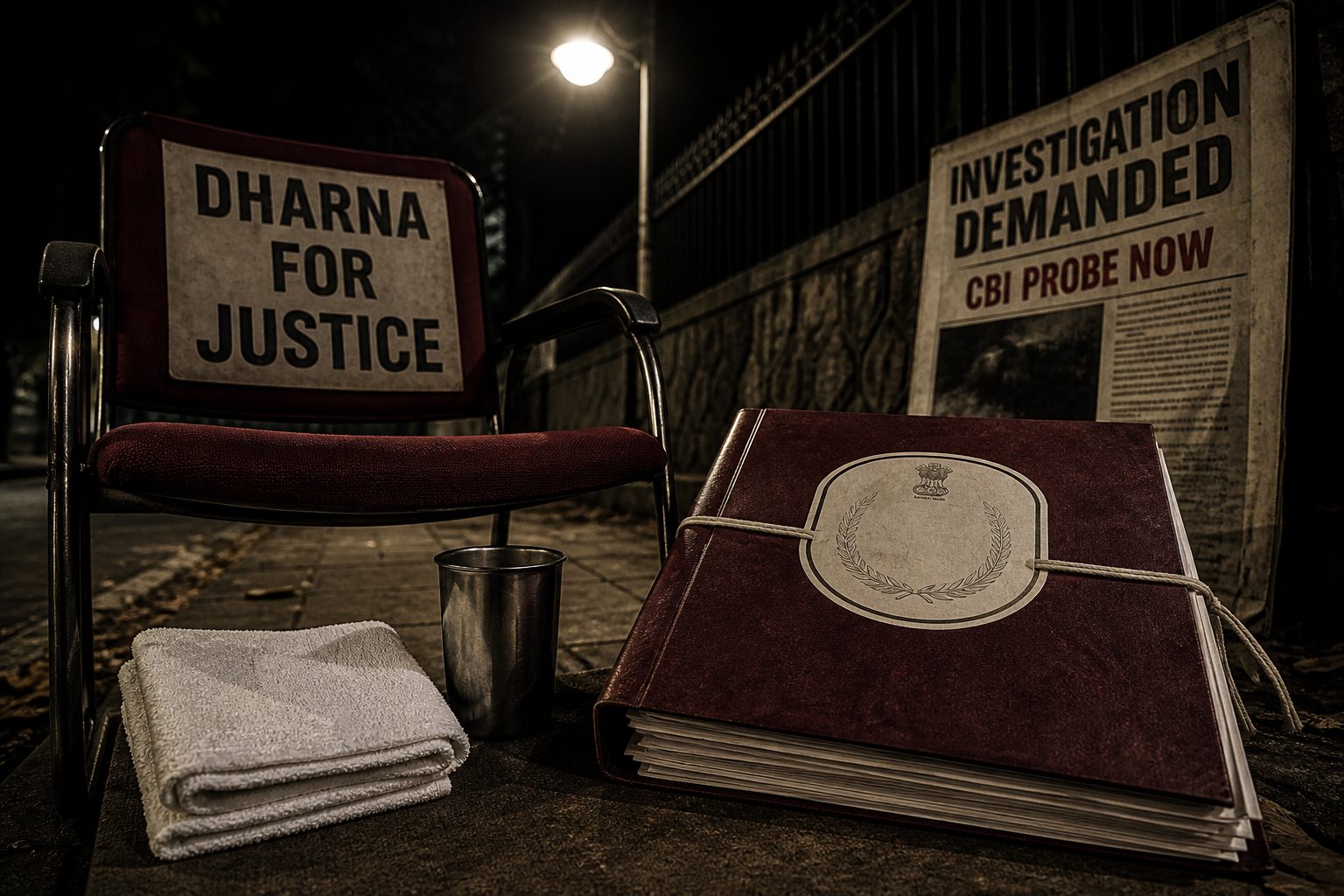
The Andhra Pradesh Junior Doctors’ Association had asked for a 30 percent hike once every two years. That was a doubling of the 15 percent biennial revision they had been getting. On Wednesday night they brought the ask down to 20 percent. The government, through Health Secretary G. Veerapandian, offered 3 percent a year for junior doctors and super-speciality doctors, and 5 percent this year for interns, then 3 percent later. The association called 3 and 5 inadequate and unjustifiable. Candlelight rallies ran at government hospitals the same night. On Thursday the placards were outside Government Siddhartha Medical College in Vijayawada.
The arithmetic the doctors put in a 13-point note is the part a finance department can answer. A 15 percent hike, they said, would cost an extra ₹87.91 crore a year. That is about 0.5 percent of the health department’s 2026–27 budget estimate, and about 0.03 percent of the State budget. Inflation has already eaten the old stipend. The last two years of missed revision have piled on. Three percent does not close that gap. It names it.
The Health Department’s release said the Cabinet had discussed the strike and that Chief Minister N. Chandrababu Naidu wanted the financial constraints explained to the protesters. The State, the release said, cannot even continue the old 15 percent. Assistant professors themselves earn less, the department added, so a larger stipend would invert the table. The doctors’ reply was that those assistant professors never received one Pay Revision Commission, which would have lifted their pay. The comparison, they said, is a wound, not a reason.
Two other demands sat beside the money and were not answered. The association wants National Medical Commission rules followed on who may be recruited with an MSc or a PhD. It opposes lifting the retirement age to 65. A stipend fight that ignores those two points is a fight the government has chosen to shrink.
APJUDA treasurer D. Ranjeet has said the 15 percent arrived even in the pandemic years of 2020 and 2022, when the State’s finances were also described as bad. This time the protest is not only about a delayed instalment. It is about the size of the instalment. Interns, junior doctors and super-speciality doctors have withdrawn emergency and non-emergency work in government teaching hospitals until there is a settlement.
They have asked to put the case before the Chief Minister, the Deputy Chief Minister, the Finance Minister and the Health Minister. A secretary’s press note is not that meeting. Until the meeting happens, the association says, the withdrawal continues.
A teaching hospital without its junior staff is not a negotiating tactic in the abstract. It is a casualty ward with a thinner line. Families who walk into a government casualty on day 4 of a no-emergency strike do not care which side first refused 15 percent. They care who is on the floor. That is why a 20 percent climb-down matters. The doctors have already moved. The government has offered a number that does not meet last year’s inflation, let alone two missed revisions.
0.03 percent of a State budget is not a collapse. It is a choice. The choice, so far, is to keep the 3 percent on the table and keep the juniors off the wards. Siddhartha’s gate has the placards. The Chief Minister has the file. The patients have the wait.
Comments