₹8,452 crore in the vault. ₹87.85 lakh out the door.
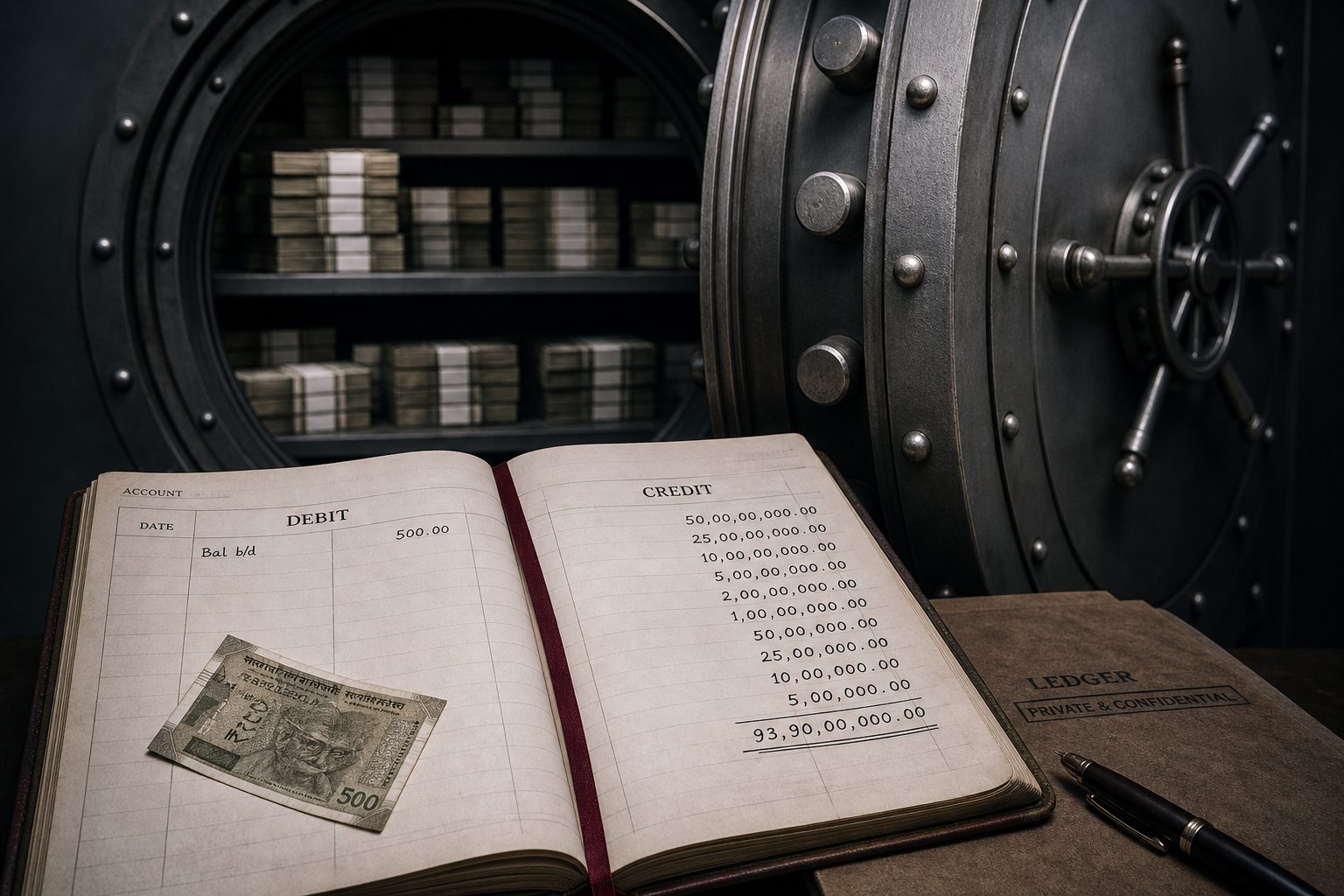
₹8,452 crore sat in PM CARES on 31 March 2025. In the year that ended that day, the fund spent ₹87.85 lakh.
Those are not opposition pamphlets. They are the audited accounts the trust put out on 18 August. Almost all of the year’s outflow — ₹87.84 lakh — is booked under PM CARES for Children. The remaining ₹451 went on bank charges and SMS charges. The audit does not say which children, which districts, which work. A vault that large, and a tap that thin, is the whole story.
The fund was registered on 27 March 2020 as a public charitable trust, days into the national lockdown, with a starting sum of ₹2.25 lakh. The Prime Minister chairs it. The defence, home and finance ministers are trustees. It was sold as a disaster pot. In 2024–25 India still had floods, landslides and cyclones. The pot grew. The spend shrank.
Look at the income line, then at the spend line. Domestic donations that year were ₹479.04 crore. Foreign donations were about ₹92 lakh. Interest was ₹475.14 crore — ₹469.37 crore from fixed deposits and ₹5.76 crore from bank balances. Agencies that had earlier taken project money sent back ₹324.65 crore. The audit does not name those agencies or say why the money returned. A TDS refund of ₹13.49 lakh also came in. Ninety-three percent of the corpus, ₹7,846 crore, sits in fixed deposits.
Now the spend history, because a single year can be a blip. 2020–21: ₹3,976.17 crore. 2021–22: ₹3,716.29 crore. 2022–23: ₹437.87 crore. 2023–24: ₹15.59 crore. 2024–25: ₹87.85 lakh. The curve is not a mystery. It is a choice. A disaster fund that spends less each year while the deposit receipt fattens is a deposit fund.
Economist Reetika Khera, at IIT Delhi, has called the published audits delayed and hollow — paper without the names that would let anyone test the paper. Who sits on the allocation committee? On what rule is a rupee released? Who donated? Who received? Those questions are not answered by a closing balance.
Activist Anjali Bhardwaj, who works on the right to information, has said the larger wound is the lock on the lock. PM CARES is kept outside the RTI Act. Early on, public sector companies put more than ₹3,000 crore of CSR money into it on the claim that this was a central-government fund under the Companies Act. When people asked where the money went, the government later changed the Companies Act rules and said the fund was not a public authority after all. A fund that collected like a government and reports like a private trust is a design, not an accident.
Bhardwaj has also asked about the ₹324.65 crore refund. In the Covid years, defective ventilators bought with this money reached hospitals; the Aurangabad bench of the Bombay High Court took notice, and a refund was later cited to say the machines were no longer a PM CARES supply. A refund without a named project is how a controversy leaves a balance sheet.
Donors remain unnamed. That is the electoral-bond shape in another instrument: money in, no public list, ministers of the ruling cabinet as ex-officio trustees, and a legal claim that this is private. Khera’s point is blunt. If there is no conflict of interest, publishing the donor list should not hurt.
₹87.85 lakh against ₹8,452 crore is not thrift. It is a refusal to use a pot that was collected in the name of people in a disaster. A child scheme that spends ₹87.84 lakh and will not say on whom is not a scheme the public can audit. The accounts are out. The names are not. Until both are out, PM CARES is a vault with a window dressing.



Comments