APUTF begins indefinite hunger strike over Special TET for in-service teachers
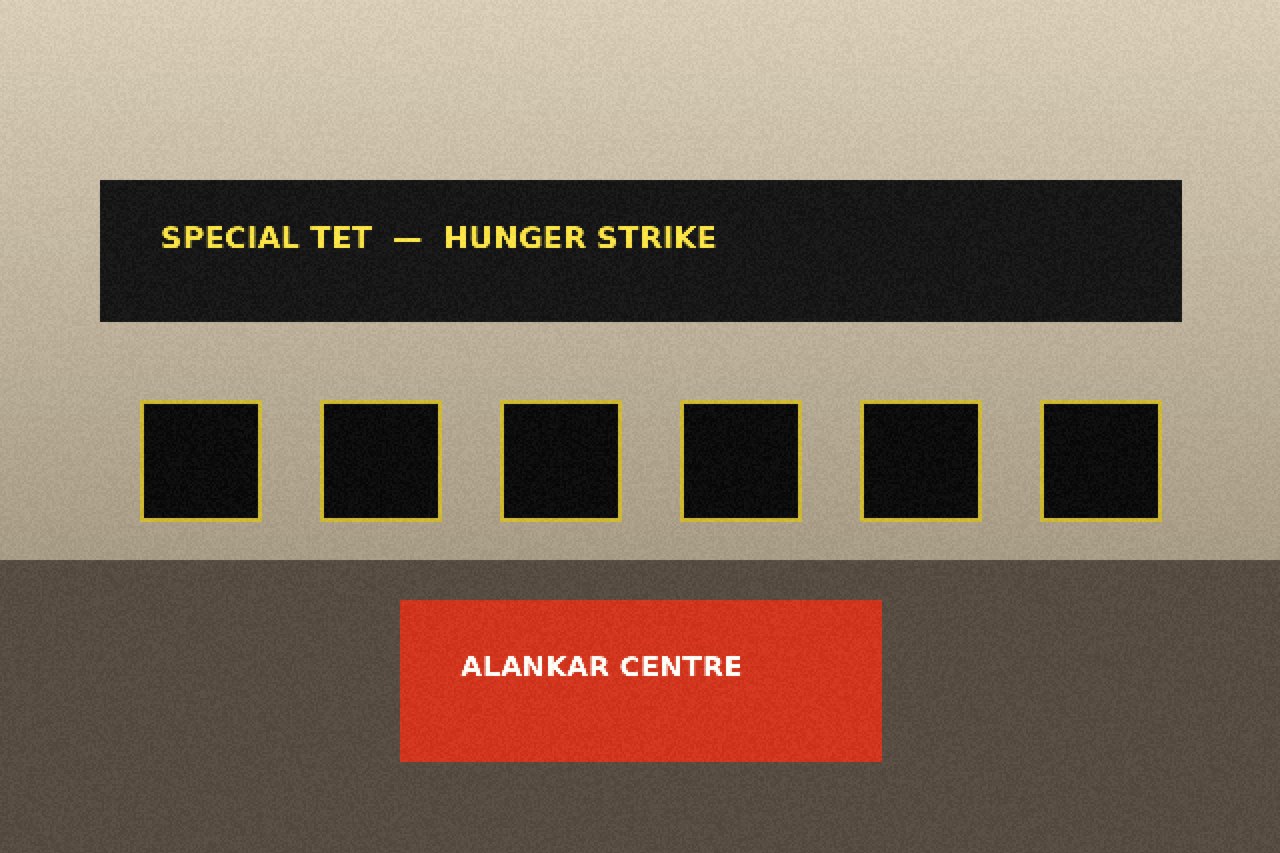
Andhra Pradesh’s teacher unions turned Teachers’ Day week into a street confrontation with the Special Teacher Eligibility Test. On 4 September 2026 the Andhra Pradesh United Teachers’ Federation announced an indefinite hunger strike at Alankar Centre in Vijayawada after, on its telling, representations to Human Resource Development Minister Nara Lokesh failed.
APUTF’s locked demands are specific. It wants the Centre to amend Section 23(1) of the Right to Education Act; a 40 percent qualifying mark for in-service teachers; an examination in the subjects teachers actually teach; amendments to National Council for Teacher Education guidelines; and an offline mode for the test. State president N. Venkateswarlu and general secretary K.S.S. Prasad fronted the agitation. Those demands are the union’s charter; this cutting does not invent a government acceptance or rejection letter beyond the failed-representation claim the union itself put on record.
A parallel protest continued. The Andhra Pradesh Teachers’ Federation held a day-2 demonstration at Dharna Chowk seeking an offline Special TET. General secretary K. Basava Linga Rao said teachers with up to 30 years of service were affected and alleged that inaccurate information had been given to the HRD Minister. The Andhra Pradesh Primary Teachers’ Association, through Kaki Prakash Rao and M.G. Mehdi, called on members to wear black badges on Teachers’ Day.
A photo caption locked to the day showed police trying to remove APUTF leaders near Vidya Bhavan at Atmakuru in Mangalagiri on Thursday — a reminder that the agitation is not only a press conference. The Special TET fight sits inside Lokesh’s education portfolio and inside every government’s claim that in-service quality must be tested. Unions say long-serving teachers are being forced through a gate that ignores classroom subject lines and offline access.
What is not locked: a cancelled TET date, a Cabinet note conceding 40 percent, or a finished NCTE amendment. What is locked: Alankar Centre hunger strike from 4 September, the demand list, APTF’s Dharna Chowk day-2, APPTA’s black-badge call, and the Mangalagiri removal attempt. For a Political card in a local-poll month, teacher unrest is not a side story; it is a governance stress test on the HRD desk.
Special TET for in-service teachers collides with two public goods: classroom quality and teacher security of tenure. Unions argue that teachers with decades of service should not face a one-size gate that ignores the subjects they teach or forces an online mode many find hostile. The government’s side of the ledger — that eligibility norms under RTE and NCTE bind the state — is the legal weather around the hunger strike, even when a detailed official rebuttal was not locked in the 4 September tip.
Naming Venkateswarlu, Prasad, Basava Linga Rao, Kaki Prakash Rao and Mehdi keeps the agitation’s leadership on record. Three union brands on one day — APUTF, APTF, APPTA — show the discontent is wider than a single faction. Black badges on Teachers’ Day are a symbolic escalation timed for maximum public embarrassment.
The Mangalagiri removal attempt near Vidya Bhavan places the Education Department’s physical campus inside the story. When police and union leaders clash at the education office door, the Special TET fight is no longer only a file. Lokesh’s HRD portfolio therefore appears in two cuttings this edition: as the minister who heard failed TET representations, and as the pre-Cabinet voice ordering vigilance on education “conspiracies.” Readers should keep those roles distinct.
Until the Centre amends RTE Section 23(1) or the state redesigns Special TET around a 40 percent in-service mark, subject-wise papers and offline centres, Alankar Centre remains a Political pressure point in the capital region.





Comments