
Tirumala Brahmotsavams from 15 September: 2,800+ CCTVs and parking for 2,500–3,000 vehicles
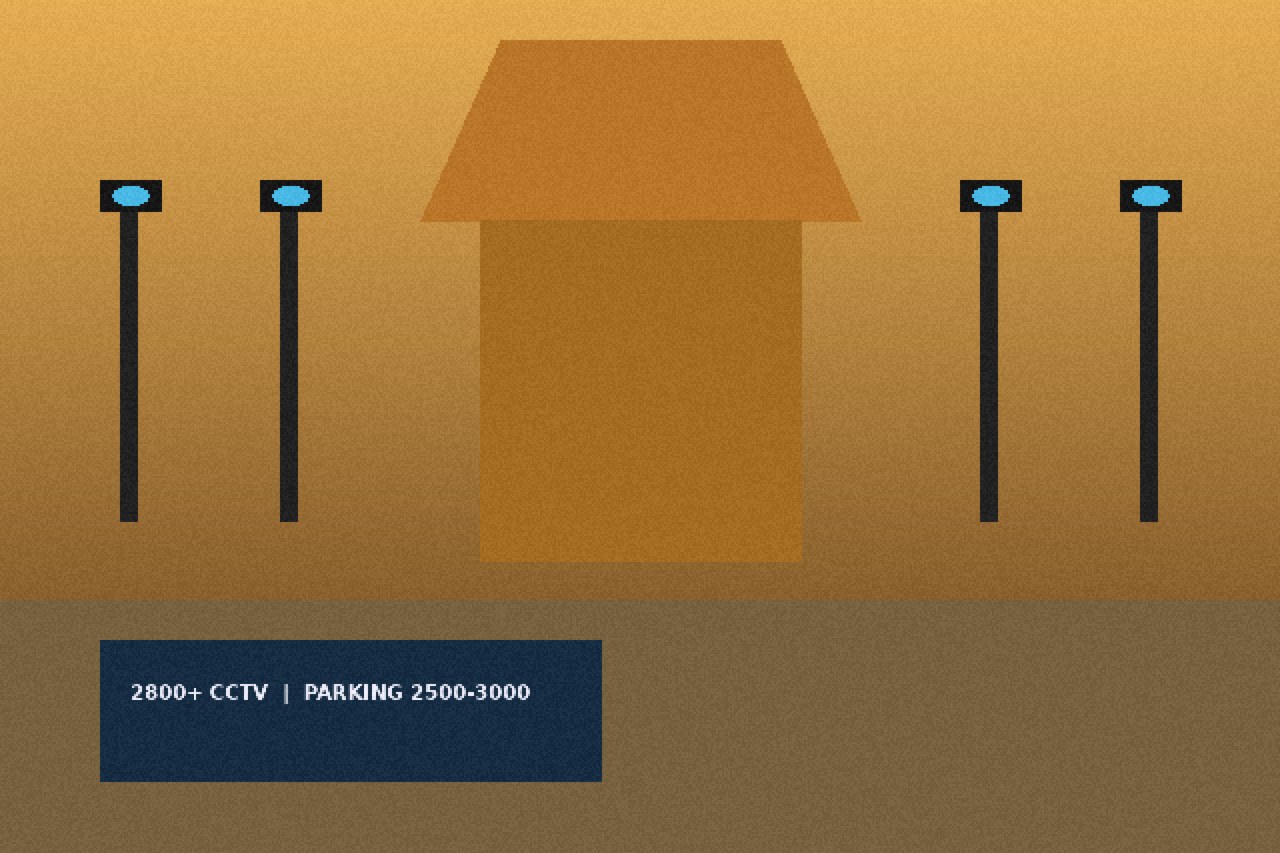
Tirumala’s nine-day Brahmotsavams begin on 15 September 2026, and on 4 September the security map went on public inspection. Tirupati Superintendent of Police L. Subbarayudu and Tirumala Tirupati Devasthanams Chief Vigilance and Security Officer Murali Krishna toured the hill shrine’s crowd and traffic arrangements with district police and TTD vigilance, security and engineering wings.
The focus locked to the inspection is operational, not ceremonial. Command and sub-control rooms are to run the festival grid. Private vehicles and yellow-board vehicles face regulation. Designated parking is being organised in Tirupati because Tirumala’s own parking capacity is about 2,500 to 3,000 vehicles — a hard ceiling once pilgrim volume spikes. More than 2,800 closed-circuit cameras are integrated with the Command Control Centre, with facial-recognition and analytics tools on the locked brief, and additional cameras planned at pressure points.
That camera count is why Culture and security overlap here. Brahmotsavam is a religious calendar event; managing lakhs of feet on a hill road is a policing and temple-administration event. The inspection does not invent a devotee forecast number that was not locked, and this cutting does not invent one. It records the dates, the officers, the parking band, the 2,800-plus CCTV grid, and the private-vehicle curb as the established public plan eleven days before the festival opens.
Coordination sits with district police plus TTD’s vigilance, security and engineering departments. Readers planning travel should treat private-vehicle limits and downhill parking as real constraints, not optional advisories. Readers watching governance should note that facial-recognition analytics on a temple festival grid raise the usual civil-liberty questions; those questions are flagged by the technology’s presence, while no locked official statement in this tip settles the privacy debate.
Tirumala’s festival economy depends on orderly queues as much as on ritual. The 4 September inspection is the state’s and the temple board’s attempt to show that the queue has a command room, a camera wall, and a parking plan before the first processional day.
Nine days of Brahmotsavam compress the hill’s entire pilgrim economy into a single security window. Processional routes, waiting lines at galleries, and the ghat road all peak together. That is why the SP and the CVSO inspected command rooms before the first ritual day rather than after a crush. Sub-control rooms matter because a single control room cannot see every choke point when multiple processions and foot queues move at once.
Yellow-board tourist vehicles and private cars compete for the same asphalt. Regulating both, while keeping emergency lanes open, is the unglamorous core of temple policing. The 2,500–3,000 vehicle parking band at Tirumala forces overflow into Tirupati’s designated lots; families who ignore that plan will meet barricades, not empty slots. Publishing the band early is crowd management by expectation-setting.
Facial-recognition analytics on 2,800-plus cameras will worry privacy advocates even as temple managers call them a missing-person and stampede-prevention tool. This cutting notes the capability because it was locked to the inspection brief; it does not invent an SOP for how long face templates are stored or who may query them. Those rules, if they exist in writing, were not in the 4 September tip.
Culture coverage of Brahmotsavam usually begins with deities and ends with darshan. This edition begins with the camera wall and the parking ceiling because that is what the officers chose to show eleven days out. Devotees still come for the festival; the state and the TTD are advertising that the festival now runs through a command centre.




Comments