
Naidu locks 34% BC reservation for local polls — ‘not one percentage point less’
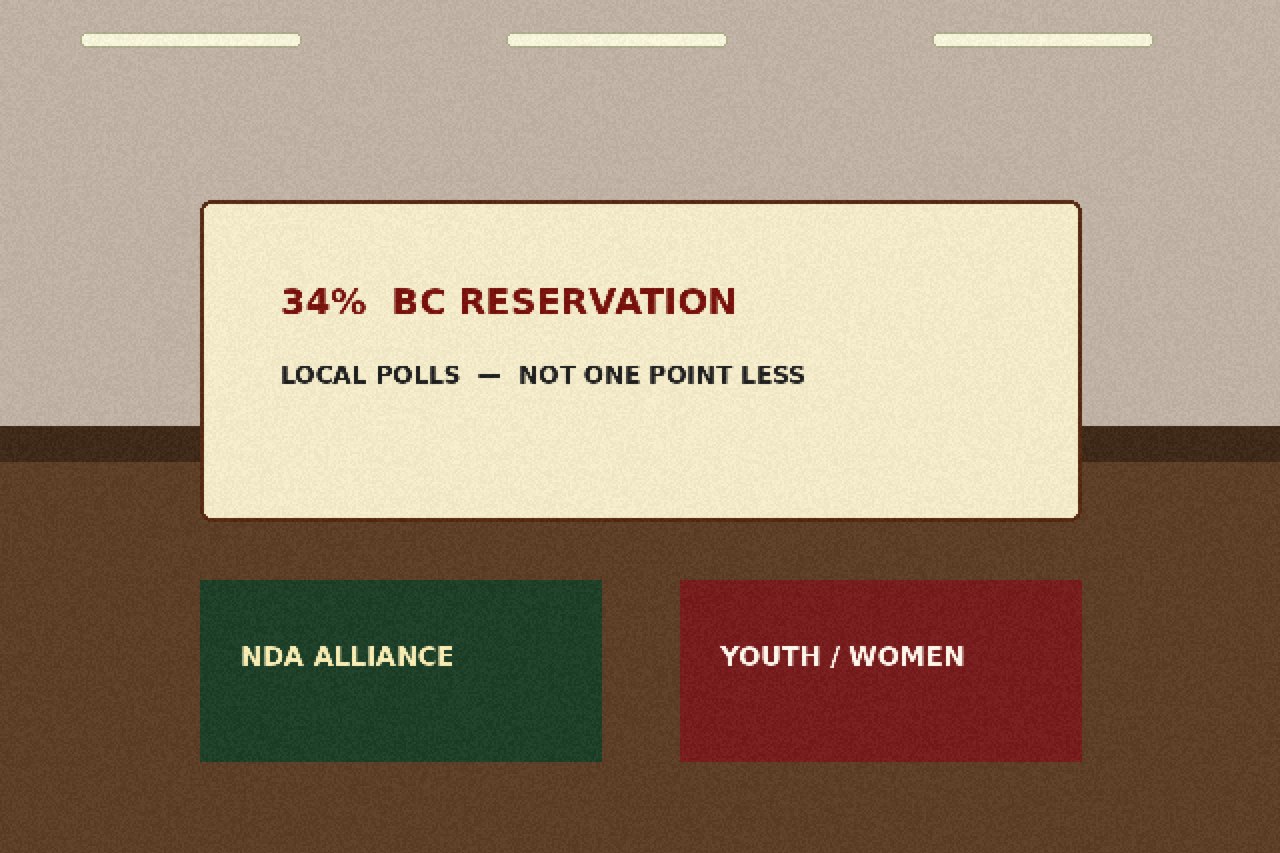
Chief Minister N. Chandrababu Naidu told ministers and zonal observers on 4 September 2026 that Backward Classes reservation in the coming local-body elections will stay at 34 percent — and will not be cut by even one percentage point. The meeting was attended by Nara Lokesh and Telugu Desam Party Andhra Pradesh president Palla Srinivasa Rao.
Naidu framed the polls as the first local-body elections the Telugu Desam will fight as part of the National Democratic Alliance. Partner coordination, he said, must be seamless, and candidate decisions must fit local context. Priority, he said, goes to youth and women candidates, with “social re-engineering” aimed at a better strike rate than the 2024 Assembly elections. Those are campaign instructions, not a finished candidate list; this desk does not invent names.
On reservation, his language was absolute. The 34 percent BC quota, rooted in the 1995 Act on his telling, may increase if needed, but it will not be reduced by a single percentage point. The legal fight over the quota continues. That line is meant for both the community and the courtroom: a public pledge while litigation over the 50 percent SC+ST+BC ceiling remains unresolved.
A Leadership Training Conclave is scheduled for 7–8 September at the party office. Naidu also congratulated the government team on the Veligonda Phase-1 and Polavaram Left Main Canal inaugurations. He accused the Opposition of seeking judicial delay pending Special Intensive Revision in order to block state funding — again an allegation on the political record, not a judicial finding.
Read together with the High Court’s dismissal of ward-delimitation petitions the same day, Naidu’s 34 percent lock is the ruling alliance’s social compact for the October push. Readers should hold the pledge, the NDA-alliance framing, the youth-and-women priority, the 7–8 September conclave dates, and the Veligonda–Polavaram congratulations as locked. Candidate lists, seat-sharing maths, and any final court order on the reservation ceiling are not locked and are not invented here.
Backward Classes reservation at 34 percent is both a legal artefact and a mobilisational pledge. By tying it to the 1995 Act and by saying it may rise but will not fall by a point, Naidu is speaking to BC organisations that fear dilution under the 50 percent ceiling fight, and to courts that may yet redraw the arithmetic. The pledge does not end the litigation; it sets the government’s political red line while litigation continues.
Fighting local-body polls as an NDA alliance for the first time changes booth-level maths. Partner coordination “seamless” and “local-context decisions” are the phrases parties use when seat-sharing is still being negotiated. Youth and women candidate priority is the social-re-engineering slogan meant to refresh tickets after 2024. Strike-rate ambition versus the Assembly result is the internal benchmark Naidu set for zonal observers.
The 7–8 September Leadership Training Conclave at the party office is the organisational follow-through: observers and candidates will be drilled while court cases and SIR arguments continue outside. Congratulating Veligonda Phase-1 and Polavaram Left Main Canal keeps irrigation success inside the same room as reservation politics — a reminder that the alliance wants water and social justice on one stage.
Opposition allegations of judicial delay pending SIR to block funding are Naidu’s counter-charge to Opposition allegations that the government is rushing polls on imperfect rolls. This desk records both directions of blame as political speech. The locked governmental facts remain the 34 percent pledge, the NDA-first framing, the youth-women priority, the conclave dates, and the canal congratulations.





Comments