H1N1 was about 70 percent of last week’s respiratory samples on the ICMR lab network. The Union minister reviewed Delhi first.
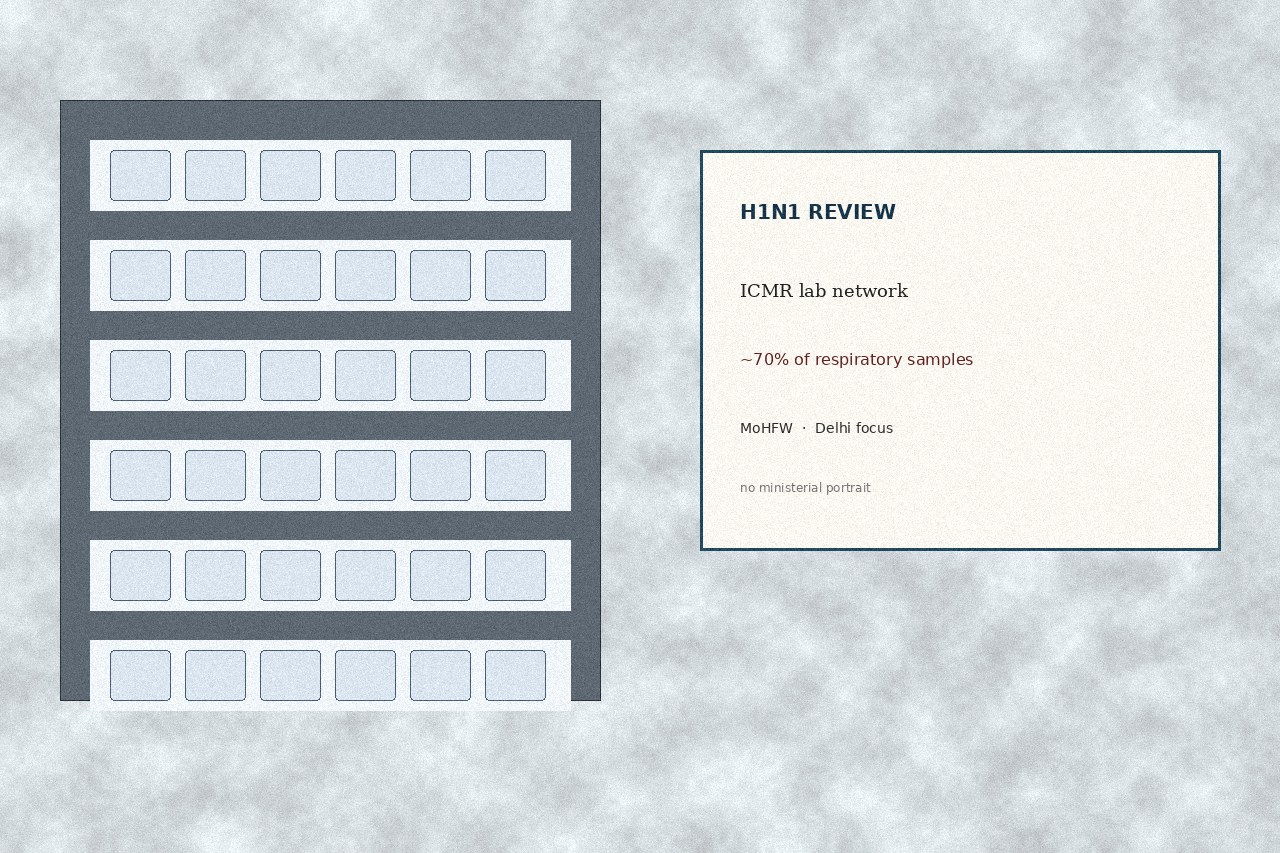
H1N1 was about 70 percent of last week’s respiratory samples on the Indian Council of Medical Research laboratory network. The Union Health Minister reviewed Delhi first.
On Friday, 21 August 2026, Union Health Minister J.P. Nadda reviewed the prevailing H1N1 influenza situation and preparedness, with particular focus on the National Capital. Delhi Health Minister Pankaj Kumar Singh attended. A review is a preparedness meeting. It is not a lockdown order. It is not a case-fatality bulletin this desk will invent.
He reviewed national surveillance and epidemiology, influenza-like illness and severe acute respiratory infection trends, testing and laboratory surveillance, and preparedness of healthcare facilities. Ministry information said Delhi hospital-bed availability, critical care and other necessary supplies were reviewed. Bed availability and critical-care stock are the nouns on the card. This desk will not invent a vacant-bed number or a ventilator count that is not locked here.
The minister emphasised public awareness — respiratory hygiene and hand hygiene — and advised those with persistent or severe respiratory symptoms, breathing difficulty or other warning signs to seek medical advice promptly. The situation, the ministry line said, is closely and continuously monitored. Hygiene advice and prompt care-seeking are the public health sentences. This desk will not turn them into a city-wide advisory number that nobody issued on this card.
The ministry’s coordination sentence is on the record. The Ministry continues to coordinate with States and Union Territories, hospitals, laboratories and other stakeholders to ensure effective surveillance, early detection, timely clinical management and proactive preparedness for seasonal influenza, including H1N1. Coordination is the verb. Panic is not.
Surveillance data showed H1N1 accounted for around 70 percent of respiratory infections reported through the Indian Council of Medical Research’s laboratory network in the previous week. H1N1 has been in circulation at high numbers over the last four to five weeks, with numbers slowly going down over the last two weeks. Current-week data were not yet available on the desks that locked this tip. Seventy percent is a previous-week laboratory-network share. It is not a Delhi-only tally. This desk will not print a nearly-1,700 Delhi figure that does not sit on the pages used here.
New Delhi is the review city. The National Capital is the particular focus named on the card. Seasonal influenza including H1N1 is the disease frame. This desk will not invent a school closure, a mask mandate, or a vaccine-stock figure. It will not put a photograph of the minister on this page from a news-agency frame.
Until newer laboratory weeks are published, the public ledger is a 21 August Union and Delhi health-minister review, a national look at influenza-like illness and severe acute respiratory infection trends, testing and facility preparedness, a Delhi check of beds, critical care and supplies, public advice on respiratory and hand hygiene and on seeking care for warning signs, a ministry coordination line with States and Union Territories, around 70 percent H1N1 share on the previous week’s Indian Council of Medical Research laboratory-network respiratory infections, high circulation for four to five weeks, and an easing over the last two weeks with the current week still uncounted. Swine flu is the common name the public uses for H1N1. The review is how the ministry has answered this week’s share.










Comments