
The fine was ₹5 crore. The Supreme Court said the polluter-pays link was never proved, and ordered the money back.
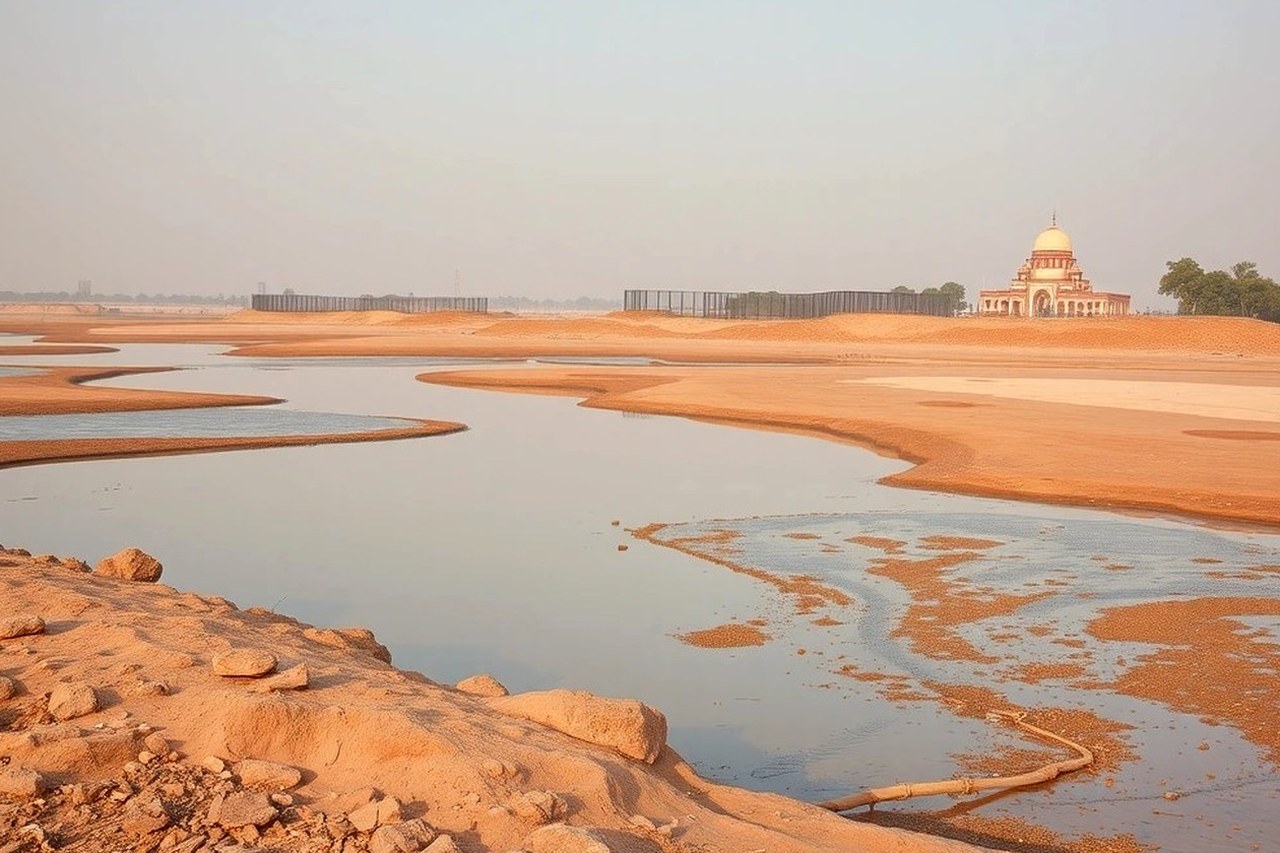
The fine was ₹5 crore. The Supreme Court said the polluter-pays link was never proved, and ordered the money back within four weeks.
On Saturday, 22 August 2026, a bench of Justices Satish Chandra Sharma and N.K. Singh set aside the December 2017 National Green Tribunal decision that had held Sri Sri Ravi Shankar’s Art of Living Foundation responsible for damage to the Yamuna floodplains during the 2016 World Culture Festival. The appeal was by Vyakti Vikas Kendra India, associated with the Foundation. The court directed the Delhi Development Authority to refund the ₹5 crore the foundation had deposited, within four weeks. A refund order is not a finding that the floodplain was healthy. It is a finding that this levy, on these facts, could not stand.
The World Culture Festival ran from 11 to 13 March 2016 on around 25 hectares of the floodplain. The ₹5 crore had been deposited under a March 2016 National Green Tribunal interim. The December 2017 final order is the paper the Supreme Court has now set aside. Ten years sit between the festival and Saturday’s judgment. This desk will not invent a tree count, a silt volume, or a rehabilitation acreage the card does not lock.
Justice Sharma’s criticism of the Delhi Development Authority is on the record. The court disapproved of how DDA granted permission on an active floodplain. It was, he said, not only avoidable, but also not consistent with the precautionary principle and the doctrine of public trust. That sentence is aimed at the permission-giver. It is not a fresh fine on the foundation. DDA must continue rehabilitation as per the proposed plan and the National Green Tribunal’s directions. The Supreme Court said it had not altered DDA’s responsibilities. Restoration still sits with the authority that allowed the event on an active floodplain.
The court’s account of what the tribunal missed is specific. The National Green Tribunal, on the bench’s reading, failed to note that the floodplain was already damaged before it was handed over; did not specify additional damage by the foundation; did not consider a letter on debris and construction material already at the site; and relied on a solitary satellite image. Polluter-pays, the court indicated through this reasoning and through the Bar-and-Bench locking on this card, cannot apply without a causal link. A solitary image and an already-damaged plain are not, in that telling, enough to fix a ₹5 crore burden on the appellant.
The tribunal, the Supreme Court said, completely altered the character of the dispute into a proceeding for fresh development and burdened the appellant with the task of developing something that it never destroyed. That is the hinge sentence. A development order is not the same as a causation finding. The court also criticised DDA for failing duties toward the public.
New Delhi is the dateline. The Yamuna floodplain is the geography. This desk will not invent a kilometre-marker on the river, a stage photograph of Sri Sri Ravi Shankar, or a fresh compensation formula. It will not pretend Saturday rewrote DDA’s restoration duty. The order left that duty standing.
Until the refund is paid and the rehabilitation continues, the public ledger is a set-aside of the December 2017 National Green Tribunal order, a four-week DDA refund of ₹5 crore, a March 2016 festival on about 25 hectares, a criticism of permission on an active floodplain under the precautionary principle and the public-trust doctrine, a missing causal link for polluter-pays, and a restoration plan that still belongs to DDA. The fine is coming off the foundation’s books. The floodplain work remains the authority’s.







Comments