
Station bail was priced at ₹30,000. ACB priced the trap at the same cash.
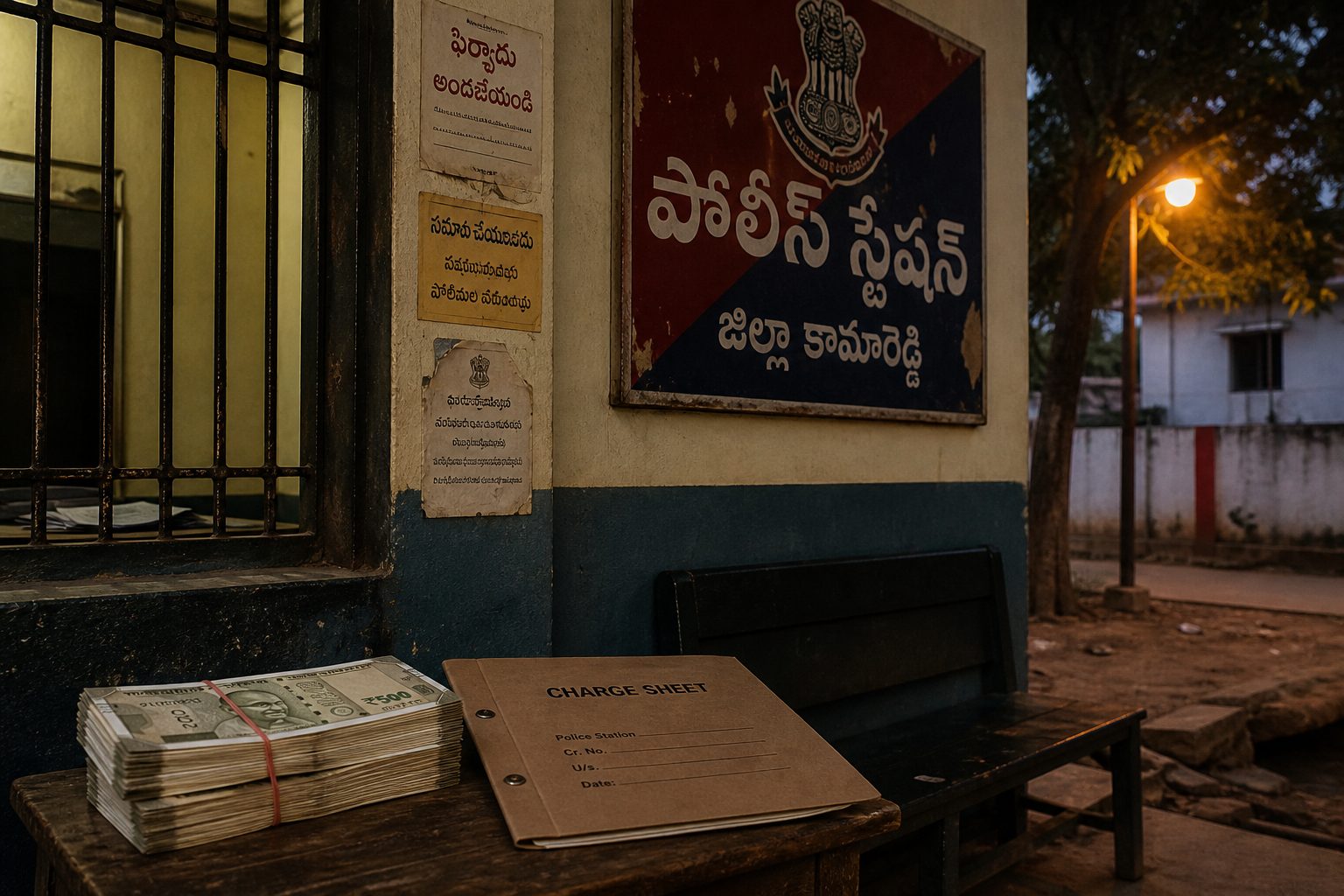
A sub-inspector in Kamareddy is in custody for a bribe that ACB says it watched change hands. The amount is ₹30,000. The place is his house. The day is Thursday, 20 August 2026. None of that is a conviction.
The officer is Duvvala Anjaneyulu, sub-inspector of Rajampet police station in Kamareddy district. The Anti-Corruption Bureau team that raided him was under Nizamabad ACB Deputy Superintendent of Police Shekhargoud. The house is in NGOs Colony, Kamareddy town. Those four coordinates — name, station, team, colony — are the public file.
The demand, as the public card states it, had two parts. ₹30,000 to arrange station bail for the complainant’s son. And ₹30,000, in the same demand, to add sections that would reduce the sentence on the charge sheet. One cash figure. Two alleged services. Station bail is a police-station release, not a court bail. Charge-sheet sections are the legal labels that decide how heavy a case looks when it reaches a magistrate. The card says the SI asked for money to soften both.
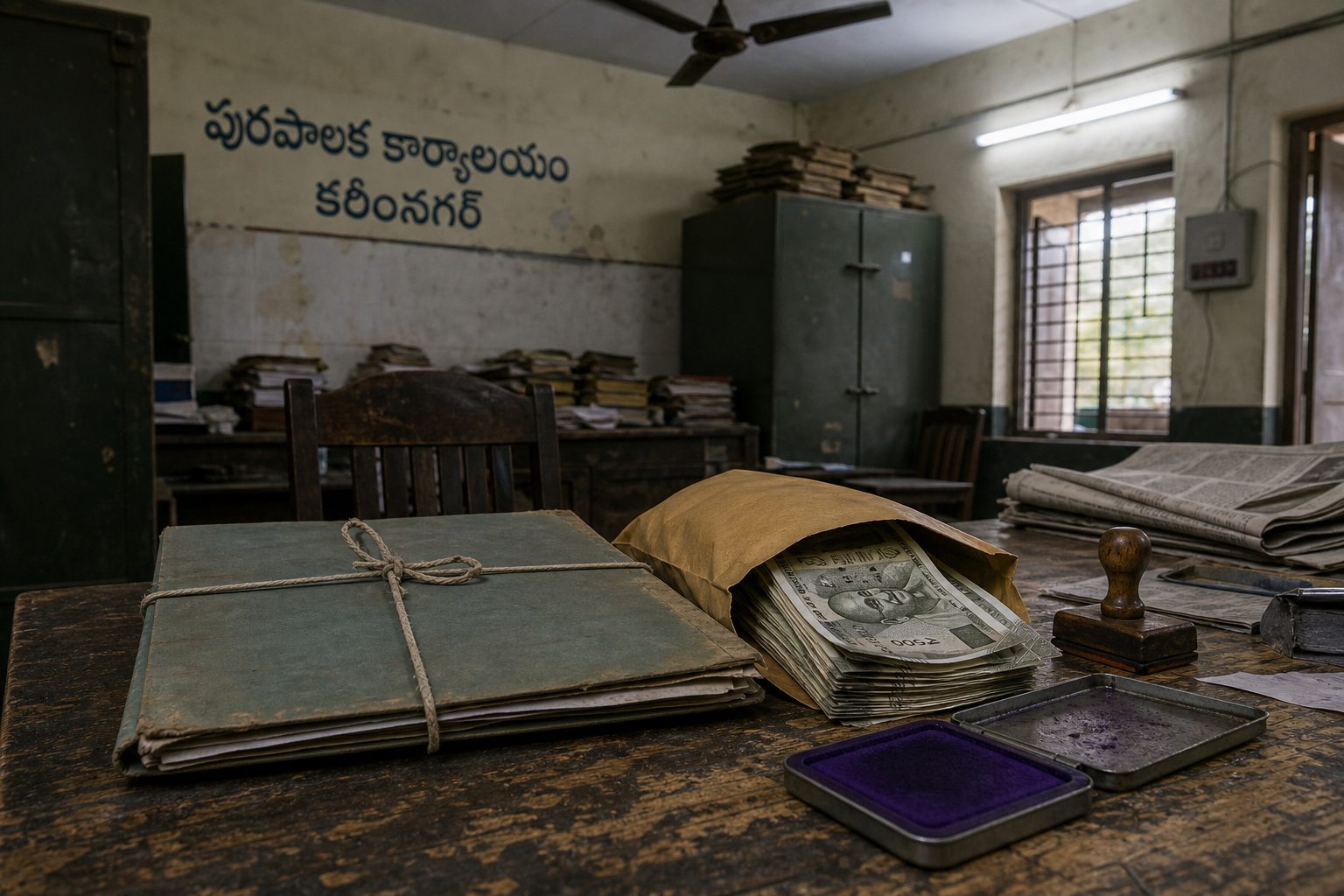
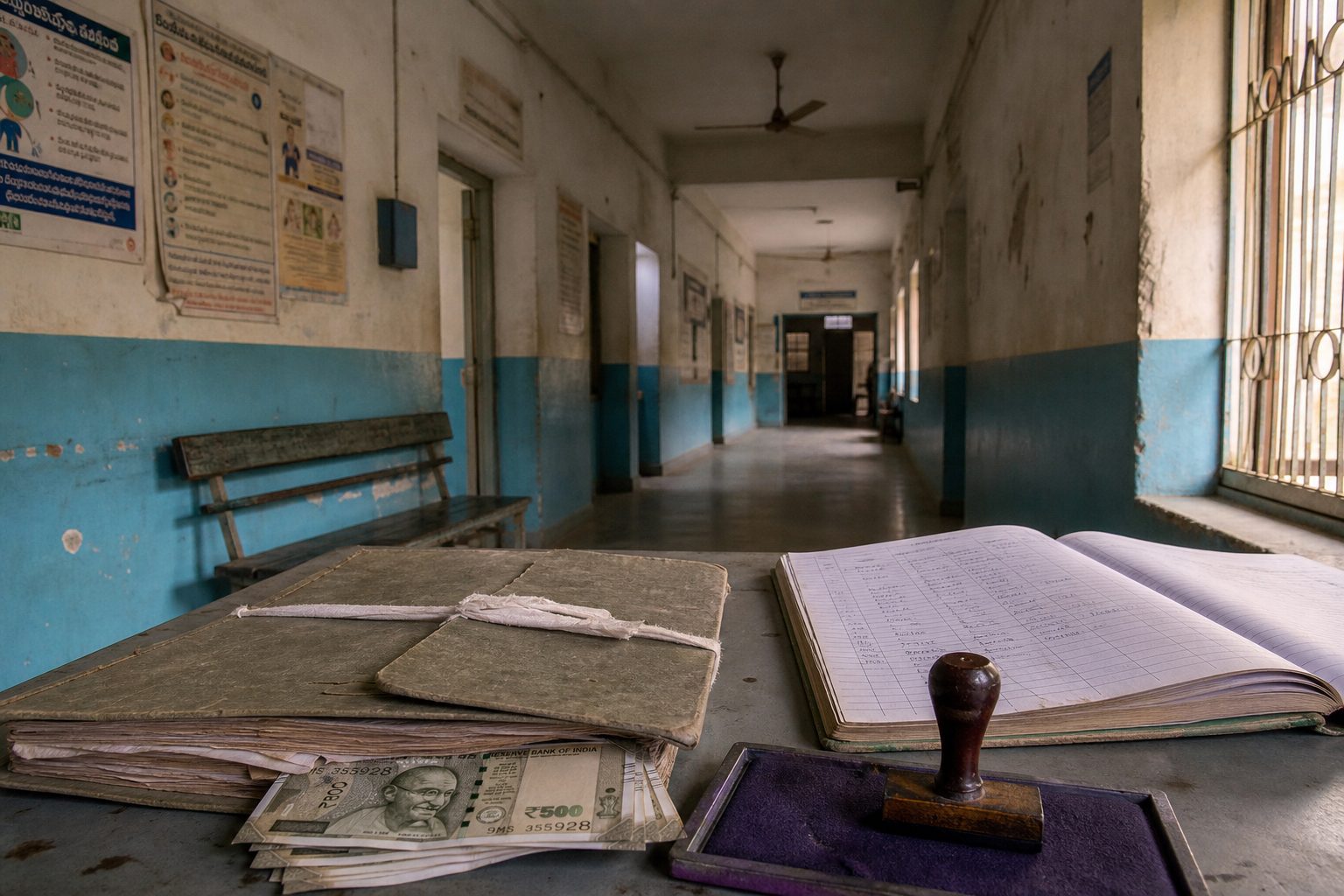
The complainant took that demand to ACB. Officers caught the SI red-handed as the cash was handed over. Red-handed is ACB’s verb for a trap in which the currency is seen moving. It is not a court’s verb for guilt. The cash in the trap is the same ₹30,000 named in the demand. This desk will not invent a marked-note serial, a drawer, or a second envelope that the card does not describe.
Anjaneyulu was taken into custody. He is to be produced before the ACB court judge at Nampally, Hyderabad. Production is the next listed step. The card does not give the hour of that production, and this desk will not invent one. The complainant’s details are to stay confidential. The case is under investigation.
What is not on the card is the son’s original offence, the sections already on the paper, the sections that were to be added, or a statement from the SI. Those silences are how a trap file gets inflated into a novel. This desk will not write the novel.
A station-bail demand is a particular kind of allegation. It says a police station was treating liberty as a priced service. A charge-sheet-softening demand is another kind. It says the same station was treating the penal code as a menu. Together they are ACB’s case, not this newspaper’s finding.
Rajampet is a police station in Kamareddy district. NGOs Colony is a residential address in Kamareddy town. The raid happened at the house, not at the station, on the facts held here. A house trap and a station crime are not the same geography. The alleged sale was of station powers. The alleged delivery of cash was at home.
Nizamabad’s ACB DSP leading a Kamareddy raid is ordinary bureau geography. ACB ranges do not stop at a district border. Nampally is where Telangana’s ACB court sits. That is why the next production is in Hyderabad and not in Kamareddy.
This is an ACB trap as reported, not a conviction. Until the Nampally court writes, ₹30,000 is an alleged price, Anjaneyulu is an accused officer, and the complainant’s son is a person whose name this desk does not have and will not hunt. The public sentences are enough: a demand, a trap, a house in NGOs Colony, a DSP named Shekhargoud, custody, and a court in Nampally.
Thursday’s news is that a police station’s bail window was, in ACB’s telling, put on a cash counter of ₹30,000. The bureau says it closed that counter with the same notes. The judge at Nampally will be asked to decide what those notes mean.







Comments